


Online appointment bookings are currently only available to Turkish citizens. To schedule an appointment with your passport, please call our call center or send mail: +90 850 707 0606 & international@alifehospital.com.tr
You can choose one of the communication channels below to help you.
 +90 (850) 888 54 33
 info@alifehospital.com.tr
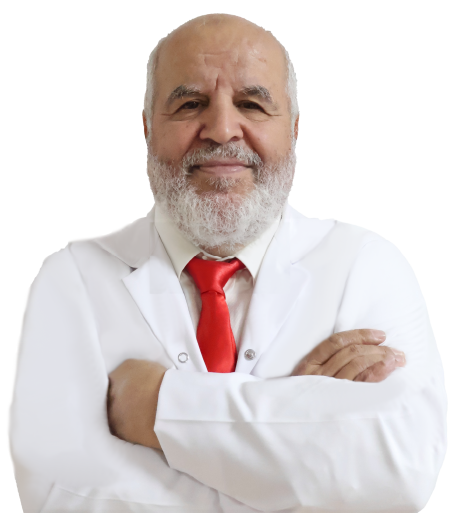
Specialist Dr. Secaattin SAÇIKAY is an experienced physician specialized in neurology. Dedicated to understanding the complex nature of nervous system diseases and providing effective solutions for these conditions, Dr. SAÇIKAY stands out with his professional competence.
After completing his general medical education, Dr. SAÇIKAY specialized by receiving advanced training in neurology. During this training, he gained in-depth knowledge and experience regarding the etiology, pathophysiology, diagnostic methods, and treatment principles of neurological diseases. He has expertise in a wide range of neurological disorders affecting the brain, spinal cord, peripheral nerves, and muscles.
The foundation of Specialist Dr. SAÇIKAY’s professional practice is a patient-centered approach and an interest in current medical practices. He strives to understand his patients’ individual needs and determine the most effective treatment strategies. He values open and transparent communication with his patients and prioritizes providing them with detailed information about the treatment process.
| Education Type / Position | Institution | Years |
|---|---|---|
| Medical Faculty (Military Student) | Ankara University Faculty of Medicine | 1977-1983 |
| Continental Service | Malatya 7th Main Jet Base Command | 1984-1988 |
| Specialization | Ankara Gülhane Training and Research Hospital | 1989-1993 |
| Years | Institution |
|---|---|
| 1994-1997 | Etimesgut Air Hospital |
| 2004-2023 | Sincan State Hospital |
| 2024-Halen | A Life Health Group |
Neurologists are specialists who diagnose, treat, and manage diseases affecting the brain, spinal cord, peripheral nervous system, and muscles. Their areas of interest can be quite broad and diverse.
Medical conditions frequently addressed by neurologists:
We can create a list of various methods and tests used in the diagnosis of neurological diseases.
Some common diagnostic neurology applications:
Taking the patient’s history (symptoms, onset and duration, family history, medications, etc.)
Assessment of consciousness level, mental status, language functions, and cranial nerves
Examination of motor functions (strength, coordination, reflexes) and sensory system (touch, pain, temperature, vibration)
Posture, gait, and balance examination
Computed Tomography (CT): Used to obtain cross-sectional images of the brain, spinal cord, and other structures
Magnetic Resonance Imaging (MRI): Highly valuable for diagnosing conditions such as stroke, tumors, and multiple sclerosis due to its superior soft tissue contrast
Angiography: Used to visualize brain vessels; helps identify conditions such as vascular occlusions, aneurysms, and AVMs
Doppler Ultrasonography: Evaluates blood flow in neck vessels (carotid and vertebral arteries)
Electroencephalography (EEG): Records brain waves to assess epilepsy, sleep disorders, and other brain function abnormalities
Electromyography (EMG): Measures electrical activity of muscles and nerves; helps detect muscle diseases and nerve damage
Nerve Conduction Studies (NCS): Evaluates peripheral nerve function; used in diagnosing conditions like nerve compression and neuropathy
Evoked Potentials (EP): Measures electrical responses of the nervous system to specific stimuli (visual, auditory, somatosensory)
Lumbar Puncture (LP): A procedure to examine cerebrospinal fluid; used to diagnose inflammatory or infectious diseases such as meningitis or multiple sclerosis
Muscle or Nerve Biopsy: Rarely performed to examine tissue samples; helps confirm diagnosis of muscle diseases or neuropathies
Last Updated: 21 Nisan 2026 19:19
 Randevu Al
We are here for all your questions and problems 24/7.
Please fill in the fields below so that we can reach you
Başlangıç Tarihi:
Bitiş Tarihi:


 E-Appointment
  E-Result


 More Detail
  0 (850) 888 54 33
 WhatsApp
 E-Appointment