

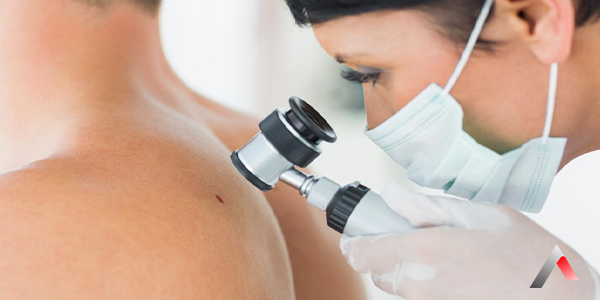
A dermatoscope is a handheld device used to magnify and examine skin lesions (such as moles, spots, rashes) in more detail. The dermatoscope works by polarizing light on the skin surface, allowing deeper layers to become visible. This enables the visualization of structures and features not seen with the naked eye, allowing for a more accurate assessment of skin lesions.
Dermatoscopy is the examination of skin lesions using a dermatoscope. This procedure is an important method for the early diagnosis of skin cancer and the evaluation of moles (nevi). Dermatoscopy is a non-invasive, painless, and quick procedure.
Dermatoscopy is performed for the following purposes:
Skin Cancer and Early Diagnosis: Skin cancer is a type of cancer resulting from the uncontrolled division and proliferation of skin cells. Dermatoscopy aids in the early diagnosis of skin cancer. Early diagnosis increases the chances of successful treatment.
Evaluation of Moles (Nevi): Moles are benign formations resulting from the accumulation of melanocyte cells that produce melanin pigment in the skin. Dermatoscopy helps to distinguish between cancerous (malignant) or precancerous (dysplastic) moles by examining their structure.
During a dermatoscopy procedure, the skin lesion is first examined with the naked eye. Then, the dermatoscope is placed on the skin, and the lesion is magnified and examined. The dermatoscope polarizes the light on the skin surface, allowing deeper layers to become visible. This enables the visualization of structures and features not visible to the naked eye. The dermatoscopy procedure is painless and lasts only a few minutes.
Dermatoscopy is recommended for the following individuals:
Those with numerous moles: Individuals with many moles on their body have a higher risk of skin cancer. Those with atypical moles: Atypical moles are moles that look different from normal moles and have a higher risk of developing into melanoma (a type of skin cancer). Those with a family history of skin cancer: Individuals with a family history of skin cancer have a higher risk of developing the condition. Those with excessive sun exposure: Excessive exposure to sunlight increases the risk of skin cancer. Those who use tanning beds: Tanning bed use increases the risk of skin cancer. Fair-skinned individuals: Fair-skinned individuals are at a higher risk for skin cancer.
There are three main types of dermatoscopy:
Manual Dermatoscope: This is the simplest type of dermatoscope. It uses a magnifying lens system to enlarge the skin lesion.
Digital Dermatoscope: This is a device that digitally records the image of the lesion. These images can then be examined and analyzed on a computer.
Video Dermatoscope: This is a device that records a video of the lesion. This allows for the monitoring of changes in the lesion over time.
Dermatoscopy can be used in the diagnosis of many skin diseases. The most common areas where it is used are:
Melanoma: This is the most dangerous type of skin cancer. Dermatoscopy plays an important role in the early diagnosis of melanoma.
Basal Cell Carcinoma: This is the most common type of skin cancer. It grows slowly and rarely spreads.
Squamous Cell Carcinoma: This is the second most common type of skin cancer. It can grow and spread more quickly.
Other Skin Diseases: Dermatoscopy can also be used in the evaluation of benign (non-cancerous) skin lesions (such as nevi, seborrheic keratosis) and in the diagnosis of alopecia areata and other skin conditions.
A Life Healthcare Group is a healthcare institution specializing in dermatoscopy services. Our experienced dermatology specialists use the latest technology dermatoscopes to examine your skin lesions in detail and provide you with the most accurate diagnosis.
Protect your skin health with A Life Healthcare Group!
Last Updated: 6 Kasım 2025 14:05
Publish Date: 18 Kasım 2024 20:55
Please fill in the fields below so that we can reach you
We are here for all your questions and problems 24/7.


 TR Türkçe
 EN English
 0 (850) 888 54 33


 E-Appointment
 E-Appointment
  E-Result



 0 (850) 888 54 33
 WhatsApp
 E-Appointment