




Online appointment bookings are currently only available to Turkish citizens. To schedule an appointment with your passport, please call our call center or send mail: +90 850 707 0606 & international@alifehospital.com.tr
You can choose one of the communication channels below to help you.
 +90 (850) 888 54 33
 info@alifehospital.com.tr

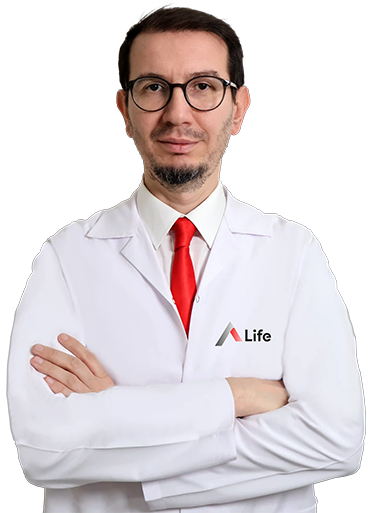
Op. Dr. Emre Pehlivan serves as an experienced physician specializing in ophthalmology at A Life Health Group. He stands out with his profound knowledge and extensive experience in preserving and improving eye health and visual functions.
Dr. Pehlivan specializes in the diagnosis and treatment of eye diseases and visual disorders, placing great importance on providing safe and effective treatment processes by utilizing all the opportunities modern medicine offers to achieve the best results for each patient. By creating personalized treatment plans, his goal is to address the individual needs and expectations of his patients.
With his patient-centered approach and professional service understanding at A Life Health Group, Dr. Pehlivan works meticulously to protect and improve his patients' vision health. He ensures a trust-based communication with his patients and works collaboratively throughout the treatment process.
Dr. Pehlivan provides services as an Ophthalmology Specialist at Altındağ Hospital.
| Institution | Years |
|---|---|
| Uludağ University Faculty of Medicine | 2001-2007 |
| Ankara University Vehbi Koç Eye Bank | 2007-2011 |
| Years | Institution |
|---|---|
| 2011-2014 | İskilip State Hospital |
| 2014-2016 | Eskişehir Air Force Hospital |
| 2019-2019 | Eskişehir Yunus Emre State Hospital |
| Ankasu Eye Center | |
| Private Akropol Hospital | |
| Active | A Life Health Group Altındağ Hospital |
As an eye disease specialist, helping you with all matters related to eye and vision health is my priority. My expertise includes diagnosing, planning treatment, and performing surgical interventions when necessary for a wide range of diseases affecting the eye and visual system.
Some of the key areas related to eye health that I focus on include:
Myopia (nearsightedness): inability to see distant objects clearly.
Hyperopia (farsightedness): inability to see nearby objects clearly.
Astigmatism: blurred vision at all distances due to uneven focusing of light on different axes.
Presbyopia: age-related decrease in near vision ability.
Macular Degeneration (Age-Related Macular Degeneration): affects the central retina, common with aging.
Diabetic Retinopathy: damage to the retina caused by diabetes.
Retinal Detachment: separation of the retina from underlying tissue.
Retinitis Pigmentosa: a hereditary retinal disease.
Keratoconus: cone-shaped protrusion of the cornea.
Corneal Infections: caused by bacteria, viruses, or fungi.
Corneal Dystrophies: hereditary corneal disorders.
Blepharitis: inflammation of the eyelids.
Dry Eye: insufficient tear production or poor tear quality.
Conjunctivitis: inflammation of the conjunctiva (the eye’s transparent surface).
Eyelid drooping (Ptosis).
Tear duct obstruction.
Misalignment of the eyes (strabismus).
Amblyopia (lazy eye).
Other pediatric eye conditions.
In order to protect and improve your eye health, I am pleased to offer you the most advanced surgical treatment options in ophthalmology made possible by modern medicine and technology. Surgical treatment of eye diseases covers a wide spectrum—from common conditions such as cataracts to the correction of refractive errors and the management of serious retinal disorders. These treatments play a vital role in restoring vision and improving your quality of life.
With my expertise and experience, the main areas of eye surgery I can offer include:
These methods are used to correct myopia, hyperopia, and astigmatism.
Phacoemulsification: The gold standard in cataract treatment. Involves emulsifying the cloudy lens using ultrasound waves through a small incision and replacing it with an artificial intraocular lens.
A variety of surgical procedures to lower intraocular pressure and slow the progression of glaucoma. These include trabeculectomy, tube shunt implantation, and minimally invasive glaucoma surgery (MIGS).
Vitreoretinal Surgery: A group of surgical techniques used to treat retinal detachment, macular holes, vitreous hemorrhage, and diabetic retinopathy. These procedures are performed under a microscope using specialized instruments.
Corneal Transplant (Keratoplasty): Replacing the damaged cornea with a healthy donor cornea. Variants include full-thickness and partial-thickness transplants.
Corneal Cross-Linking: A treatment used to halt the progression of keratoconus and other corneal deformities.
Surgeries involving the eyelids, tear ducts, eye socket (orbit), and surrounding facial tissues. Includes treatment for eyelid drooping (ptosis), entropion, ectropion, tear duct blockage, orbital tumors, and aesthetic eyelid surgeries (blepharoplasty).
Strabismus Surgery: Corrects misalignment of the eyes by adjusting eye muscles.
Pterygium Surgery: Removal of the tissue growing from the white of the eye onto the cornea.
Your eye health is of great importance to me. For this reason, I work meticulously to ensure that any problems related to your eyes are accurately diagnosed and that the most appropriate treatment methods are identified for you. The diagnostic process for eye diseases is not limited to a single test; rather, it is a holistic approach that combines communication with the patient, a comprehensive physical examination, and the evaluation of various advanced techniques.
When necessary, based on this assessment, we utilize a range of tests and imaging methods to obtain more detailed information.
These tests are carefully selected and applied according to the specific needs of each patient.
Fluorescein Angiography (FFA or ICGA): A test used to examine the blood vessels of the retina or choroid (the layer beneath the retina).
Optical Coherence Tomography (OCT): Used to obtain detailed cross-sectional images of the retina, macula, and optic nerve.
Visual Field Test: Conducted to determine the limits of the patient’s vision and any existing vision loss.
Corneal Topography: Maps the curvature and thickness of the corneal surface.
Other Tests: Includes color vision tests, contrast sensitivity tests, strabismus tests, electrophysiological tests, etc.
Last Updated: 8 Şubat 2026 00:21
 Randevu Al

Elvan Neighborhood 1934/4 Etimesgut/Ankara

+90 (850) 888 54 33
Aydınlıkevler, Uzayan Street No:99, 06130 Altındağ/Ankara
0850 850 54 33
Fatih Neighborhood, Yavuz Boulevard, No: 15 Pursaklar / Ankara
+90 (850) 888 54 33
We are here for all your questions and problems 24/7.
Please fill in the fields below so that we can reach you
Başlangıç Tarihi:
Bitiş Tarihi:


 TR Türkçe
 EN English


 E-Appointment
  E-Result

 More Detail
  0 (850) 888 54 33
 WhatsApp
 E-Appointment