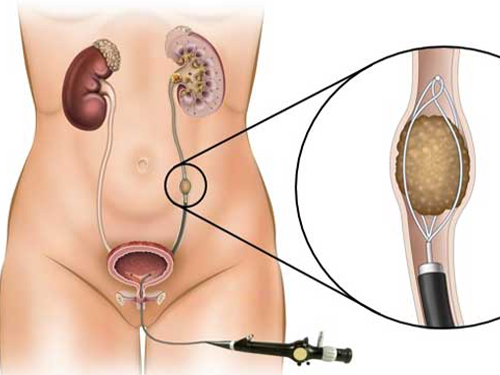
Laparoscopic Kidney Stone Surgery

Kidney Stone Surgery

Kidney stone surgery is the surgical treatment of stones in the kidneys that are too large to pass on their own or cause severe pain, infection, or impaired kidney function. This surgery aims to relieve pain, prevent infections, and preserve kidney function. The technique used for kidney stone surgery depends on the size and location of the stone as well as the patient’s overall health. Today, minimally invasive (laparoscopic) methods are preferred over open surgery, shortening the recovery period for patients.

Kidney_Stone_Surgery-_f1da6842.webp

Laparoscopic Kidney Stone Surgery

Laparoscopic kidney stone surgery is a minimally invasive procedure used to treat stones in the kidneys that cannot pass on their own or cause various complications. This method is performed through smaller incisions compared to traditional open surgery, significantly reducing the patient’s recovery time. Laparoscopic kidney stone surgery aims to maximize patient comfort and safety while taking full advantage of modern medical advancements.

Laparoscopic_Kidney_Stone_Surgery-_aa14e6b8.webp

Why Kidney Stone Surgery is Performed

Kidney stone surgery is performed to treat stones in the kidneys that are too large to pass on their own or cause various complications. The necessity of surgery depends on the stone’s size, location, symptoms, and the patient’s overall health. The main reasons for performing kidney stone surgery include:

  • Severe Pain: Surgery may be required if the stone causes intense pain (renal colic) while moving through the urinary tract.
  • Obstruction: Stones can block urine flow, impair kidney function, and require surgery to relieve the obstruction.
  • Infection: Stones may cause urinary tract infections or worsen existing infections. Recurrent infections can indicate the need for surgery.
  • Kidney Damage: Prolonged obstruction or infection can lead to kidney damage, which surgery can help prevent.
  • Large Stones: Stones too large to pass naturally (usually over 6 mm) need to be surgically removed.
  • Failure of Other Treatments: Surgery may be necessary if other treatments, such as ESWL (extracorporeal shock wave lithotripsy) or ureteroscopy, fail.
  • Bleeding: Stones causing bleeding in the urinary tract may also require surgical intervention.

Kidney stone surgery aims to relieve pain, prevent infections, protect kidney function, and improve the patient’s quality of life.

How Kidney Stone Surgery Is Performed

The method used for kidney stone surgery depends on the size and location of the stone as well as the patient’s overall condition. Below are the most common techniques used in the treatment of kidney stones:

Extracorporeal Shock Wave Lithotripsy (ESWL)

  • In this method, high-energy shock waves are directed from outside the body to break kidney stones into smaller fragments.
  • The fragmented stones are then passed naturally through the urinary tract.
  • It is generally preferred for stones smaller than 2 cm.
  • It is not a surgical operation but a non-invasive procedure.
  • Usually does not require anesthesia or may be performed under mild sedation.

Ureteroscopy (URS)

  • A thin tube called a ureteroscope is inserted through the urinary tract into the bladder and ureter (the tube connecting the kidney to the bladder) to reach the stone.
  • The stone is then broken up and removed using a laser or other specialized tools.
  • It can be used for both kidney and ureteral stones.
  • Typically performed under general anesthesia.

Percutaneous Nephrolithotomy (PCNL)

  • A small incision is made in the back to insert a tube directly into the kidney.
  • Under ultrasound or X-ray guidance, the stone is visualized and broken into pieces with a laser or other instruments, then removed.
  • Preferred for large or complex stones.
  • Usually performed under general anesthesia.

Laparoscopic or Robotic Surgery

  • Small incisions are made in the abdomen to insert a laparoscope (camera) and surgical instruments.
  • The stone is visualized and removed under direct imaging guidance.
  • Used in rare and specific cases.
  • Performed under general anesthesia.

Open Surgery

  • A large incision is made in the abdomen or side to reach and remove the stone directly from the kidney.
  • Rarely used today and typically reserved for cases where other methods are unsuitable.
  • Performed under general anesthesia.

How Laparoscopic Kidney Stone Surgery Is Performed

Laparoscopic kidney stone surgery is a minimally invasive procedure used to treat stones in the kidneys. Compared to traditional open surgery, it involves smaller incisions, offering several advantages for patients.

The procedure is performed as follows:

  • Anesthesia:
    • The surgery is usually performed under general anesthesia.
  • Incisions:
    • Several small incisions (0.5–1 cm) are made in the abdominal area.
  • Insertion of Laparoscope and Instruments:
    • A laparoscope (camera) is inserted through one of the incisions.
    • Specialized surgical instruments are inserted through the other incisions.
  • Inflation of the Abdominal Cavity:
    • The abdominal cavity is inflated with carbon dioxide gas to create a working space for the surgeon and improve visualization of organs.
  • Accessing and Breaking the Stone:
    • Under camera guidance, the kidney is reached.
    • The stone is fragmented using tools such as a laser or ultrasound.
  • Removal of Stone Fragments:
    • The broken stone pieces are removed from the abdomen using small instruments.
  • Placement of a Stent if Needed:
    • A temporary stent (DJ stent) may be placed to ensure urine flow.
  • Closure of Incisions:
    • Incisions are closed with sutures or surgical adhesive.

Advantages of Laparoscopic Kidney Stone Surgery:

  • Less pain and bleeding due to smaller incisions
  • Shorter hospital stay
  • Faster recovery and return to normal activities
  • Minimal scarring

Risks of Kidney Stone Surgery

The risks of kidney stone surgery vary depending on the size and location of the stone as well as the surgical method used.

Common Risks (All Surgery Types):

  • Infection: May occur at the surgical site or in the urinary tract.
  • Bleeding: Can occur during or after surgery.
  • Pain: Postoperative pain is normal but can be severe in some patients.
  • Anesthesia Complications: Rarely, allergic reactions or respiratory issues may occur.
  • Injury to Nearby Organs: Adjacent organs such as the intestines, spleen, or other internal organs may be injured.

Specific Risks (Depending on Surgery Type):

  • ESWL (Extracorporeal Shock Wave Lithotripsy):
    • Bleeding in or around the kidneys
    • Stone fragments blocking the urinary tract (stone street)
    • Kidney damage
  • Ureteroscopy (URS):
    • Injury to the ureter (tube between kidney and bladder)
    • Infection
    • Bleeding
    • Incomplete removal of stones
  • Percutaneous Nephrolithotomy (PCNL):
    • Bleeding (may require blood transfusion in some cases)
    • Infection
    • Air accumulation between the lung membranes (pneumothorax)
    • Kidney damage
    • Injury to nearby organs
  • Laparoscopic/Robotic Surgery:
    • Risks related to general anesthesia
    • Internal bleeding in the abdomen
    • Infection
    • Bowel injuries
    • Urinary tract injury
  • Open Surgery:
    • Infection
    • Bleeding
    • Wound healing problems
    • Long-term pain

Postoperative Period After Kidney Stone Surgery

The period following kidney stone surgery is critical for recovery and minimizing the risk of complications.

Important points to consider after surgery:

  • Hospital Stay: The length of hospitalization depends on the type of surgery and the patient’s condition. After endoscopic laser surgeries (URS, RIRS), patients are usually discharged within 1–2 days. After percutaneous nephrolithotomy (PCNL) or laparoscopic stone surgery, the average return to normal activities is around 5–7 days.
  • Pain Management: Postoperative pain is normal. It is important to take pain medications regularly as prescribed by your doctor.
  • Fluid Intake: Drinking plenty of fluids is essential for healthy kidney function and to prevent new stone formation. It is recommended to drink at least 2–3 liters of water daily.
  • Diet: Following a diet plan recommended by your doctor is important. Salt and protein intake, in particular, can affect kidney health.
  • Activity: During the recovery period, avoid strenuous exercise and follow your doctor’s advice regarding physical activity.

Frequently Asked Questions About Kidney Stone Surgery

1.Kidney Stone Laser Surgery
Kidney stone laser surgery is a minimally invasive (closed) surgical procedure that uses laser technology to break stones in the kidney or ureter.

2.Kidney Stone Lithotripsy Surgery
Kidney stone lithotripsy surgery includes various medical procedures that break kidney or urinary tract stones into smaller fragments to facilitate their passage through the urinary tract. These procedures vary depending on the size and location of the stone, as well as the patient’s overall health condition.

3.Minimally Invasive Kidney Stone Surgery
Minimally invasive kidney stone surgery is a surgical procedure that uses minimal invasive techniques to remove stones from the kidney. Compared to open surgery, this method involves smaller incisions, offering many advantages for patients.

The main methods used in minimally invasive kidney stone surgery are:

  • Ureteroscopy (URS): Ureteroscopy (URS) is a common endoscopic procedure for treating kidney stones. A thin tube (ureteroscope) is inserted through the urinary tract into the bladder and ureter (the tube connecting the kidney to the bladder) to reach the stone. The stone is broken and removed using a laser or other instruments. URS is generally effective for small to medium-sized stones.
  • Percutaneous Nephrolithotomy (PCNL): Percutaneous nephrolithotomy (PCNL) is a surgical procedure used to remove large kidney stones or stones that cannot be treated with other methods. A small incision is made in the back, and a tube is inserted into the kidney. The stone is visualized with ultrasound or X-ray and broken up or removed using a laser or other instruments.
  • Laparoscopic Kidney Stone Surgery: In laparoscopic kidney stone surgery, small incisions are made in the abdominal area to reach the kidney and remove the stones. This method offers a less painful recovery compared to open surgery due to the smaller incisions.

4.Kidney Stone Removal Surgery:
Kidney stone removal surgery is performed to treat stones in the kidney that are too large to pass naturally or cause various complications. The procedure aims to relieve pain, prevent infections, and protect kidney function.

5.Minimally Invasive Kidney Stone Surgery Cost
To learn more about the cost of minimally invasive kidney stone surgery and receive a personalized quote, please contact us.

At A Life Health Group, your health is our priority.

6.How Much Does Kidney Stone Surgery Cost?
The cost of kidney stone surgery varies depending on multiple factors. At A Life Health Group, we provide transparent pricing. After a detailed preoperative evaluation, patients receive a personalized cost estimate.

7.How Long Does Kidney Stone Surgery Take?
Approximate durations for different procedures are:

  • Ureteroscopy (URS): Typically 30 minutes to 1 hour for stones in the ureter.
  • Percutaneous Nephrolithotomy (PCNL): About 1–3 hours for large kidney stones accessed via a small incision.
  • Laparoscopic Kidney Stone Surgery: Approximately 1–3 hours.
  • Open Surgery: May take longer depending on complexity.

8.How Many Hours Does Kidney Stone Surgery Take?
The duration depends on the method used, stone size, number, and location. Generally:

  • Ureteroscopy (URS): 30 minutes to 1 hour
  • Percutaneous Nephrolithotomy (PCNL): 1–3 hours
  • Laparoscopic Surgery: 1–3 hours
  • Open Surgery: Longer, depending on complexity

Your surgeon will provide a more precise estimate based on your specific condition.

9.Private Hospital Kidney Stone Surgery Costs
For detailed information about kidney stone surgery costs and a personalized quote, please contact us.

At A Life Health Group, your health is our priority.

Prepared by A Life Medical Editorial Board.

Last Updated: 6 Kasım 2025 14:05

Publish Date: 21 Eylül 2024 00:47

Laparoscopic Kidney Stone Surgery

Quick Application Form

Please fill in the fields below so that we can reach you

Related Departments
Related Doctors
Mustafa Kemal Atikeler
Prof. Dr. Mustafa Kemal Atikeler

Urology

Similar Contents

Do you need help?

We are here for all your questions and problems 24/7.