

A Baker's cyst is a fluid-filled sac that forms behind the knee. This cyst occurs due to the accumulation of synovial fluid in a sac within the knee joint. It is usually associated with another knee problem.
Also known as a "popliteal cyst" or Baker's cyst, it can occur at any age. However, it is most commonly seen in children aged 4-7 and adults aged 35-70. It usually appears in one knee but can occur in both knees.
A Life Health Group has a team of experienced orthopedic specialists and physiotherapists. It uses modern diagnostic and treatment methods and adopts a patient-centered approach.
A Life Health Group can assist you in the treatment of Baker's cyst. Offering multidisciplinary treatment options, A Life Health Group works to help patients recover their health as quickly as possible.
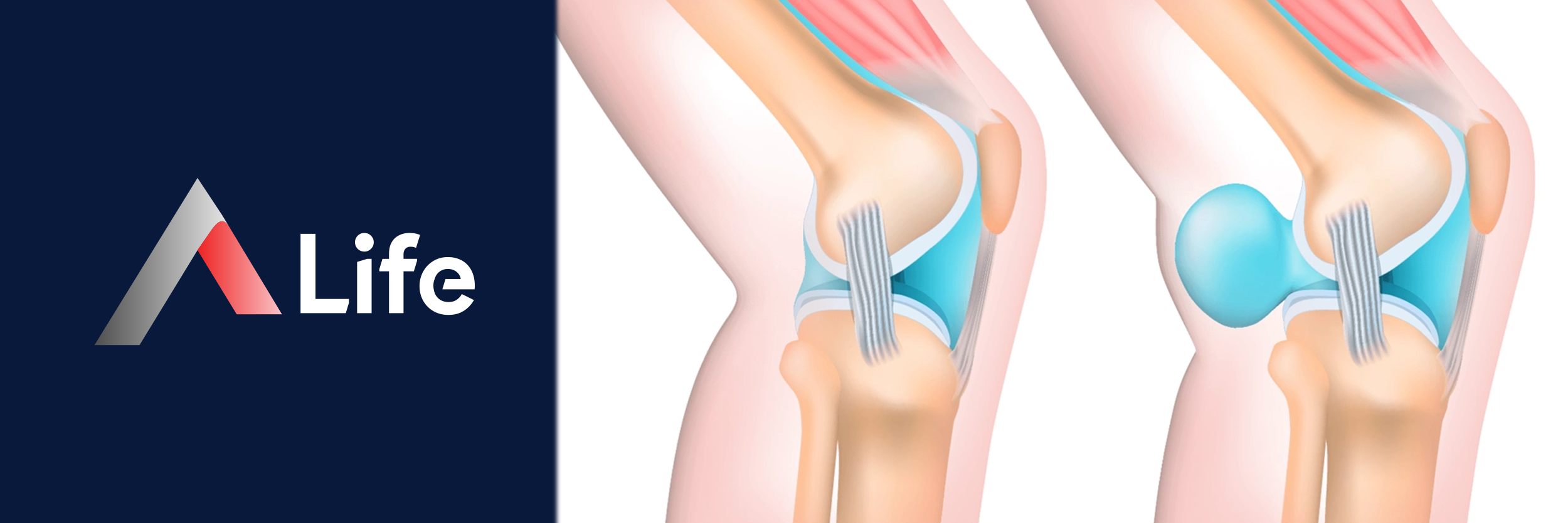
Why does knee swelling occur? Many factors play a role in the formation of Baker's cyst. These include knee joint problems, other factors, and genetic predisposition.
Knee joint problems:
Other factors:
At A Life Health Group, for detailed diagnosis of the causes of Baker's cyst:
The symptoms of Baker's cyst can vary from person to person, and some people may show no symptoms. However, common symptoms include:
Experienced orthopedic specialists at A Life Health Group evaluate the symptoms of Baker's cyst. They provide you with the correct diagnosis and treatment plan.
The diagnosis of Baker's cyst is usually made through physical examination and imaging methods.
Physical examination: Your doctor will evaluate the swelling, tenderness, and range of motion behind the knee.
Imaging methods:
Differential diagnosis: Baker's cyst can be confused with other conditions. Therefore, your doctor may request additional tests for differential diagnosis. For example, Doppler ultrasound or angiography can be performed to rule out conditions such as deep vein thrombosis (DVT) or aneurysm.
A Life Health Group diagnoses Baker's cyst accurately and quickly with advanced diagnostic technologies.
Most Baker's cysts can be treated with conservative treatment methods. These methods include:
Rest, Ice, Compression, Elevation (RICE):
Rest the knee joint. Apply ice. Wrap with an elastic bandage. Elevate the leg. These methods can reduce pain and swelling.
Medications: There are some medications for Baker's cyst. Pain relievers, such as paracetamol and ibuprofen, reduce pain. Nonsteroidal anti-inflammatory drugs (NSAIDs) are also used to reduce inflammation. Creams for Baker's cyst are also recommended.
Physical therapy: Physical therapy exercises can help increase the range of motion of the knee joint and strengthen the muscles.
Invasive treatment:
In cases where improvement is not achieved with conservative treatment methods, invasive treatment options can be considered. These options include:
Surgery:
In rare cases, Baker's cyst can be surgically removed. Surgery is preferred when the cyst is very large, causes severe pain, or does not respond to other treatments.
A Life Health Group uses personalized methods in the treatment of Baker's cyst. The most appropriate treatment is determined and applied.
Although it is not possible to completely prevent the formation of Baker's cyst, you can take some precautions to reduce the risk:
With the preventive health services of A Life Health Group, you can protect your knee health and reduce the risk of Baker's cyst.
It is generally not dangerous. However, in rare cases, the cyst can rupture and cause pain and swelling in the calf. This condition can be mistaken for deep vein thrombosis (DVT) and may require urgent medical intervention.
Yes, most Baker's cysts resolve on their own over time. Especially if the underlying cause is treated, the cyst usually shrinks and disappears.
Cyst surgery in the leg is generally a safe procedure, but like any surgery, it carries some risks. Complications such as infection, bleeding, nerve damage, and recurrence of the cyst may occur.
Baker's cyst can recur, especially if the underlying cause is not treated. If problems such as arthritis, meniscus tear, or cartilage damage in the knee joint persist, the cyst may form again.
Is Baker's cyst cancer? No, Baker's cyst does not turn into cancer. Baker's cyst (popliteal cyst) is a fluid-filled, usually benign cyst that forms in the knee joint.
It can cause swelling and a feeling of pressure behind the knee. It usually develops due to another problem in the joint (such as meniscus tear, arthritis, or inflammation).
You can get detailed information about Baker's cyst and its treatment from the specialists at A Life Health Group and ask your questions.
How does Baker’s cyst go away? It is usually a fluid-filled sac that forms behind the knee and is generally associated with another knee problem. Most Baker’s cysts resolve on their own, but treatment may be necessary in some cases.
Treatment options include physical therapy exercises for Baker’s cyst, rest, ice application, and compression. Additionally, elevation of the cyst, medication, physical therapy, cyst aspiration, corticosteroid injection, and surgery are available.
A Life Health Group has a team of experienced orthopedic specialists and physiotherapists. They use modern diagnostic and treatment methods and adopt a patient-centered approach. They can assist you with exercise therapy for Baker’s cyst in the knee.
A Life Health Group offers patient-centered service. We will support you in your Baker’s cyst treatment. We will help you regain your health.
Remember: The information in this article is for general informational purposes and does not replace medical advice. For detailed information and treatment regarding Baker’s cyst and other health issues, always consult a doctor.
A Life Health Group is here to protect your musculoskeletal health. We effectively treat Baker’s cyst.
Last Updated: 6 Kasım 2025 14:05
Publish Date: 24 Nisan 2024 17:35

Please fill in the fields below so that we can reach you
We are here for all your questions and problems 24/7.


 TR Türkçe
 EN English
 0 (850) 888 54 33


 E-Appointment
 E-Appointment
  E-Result







 0 (850) 888 54 33
 WhatsApp
 E-Appointment