

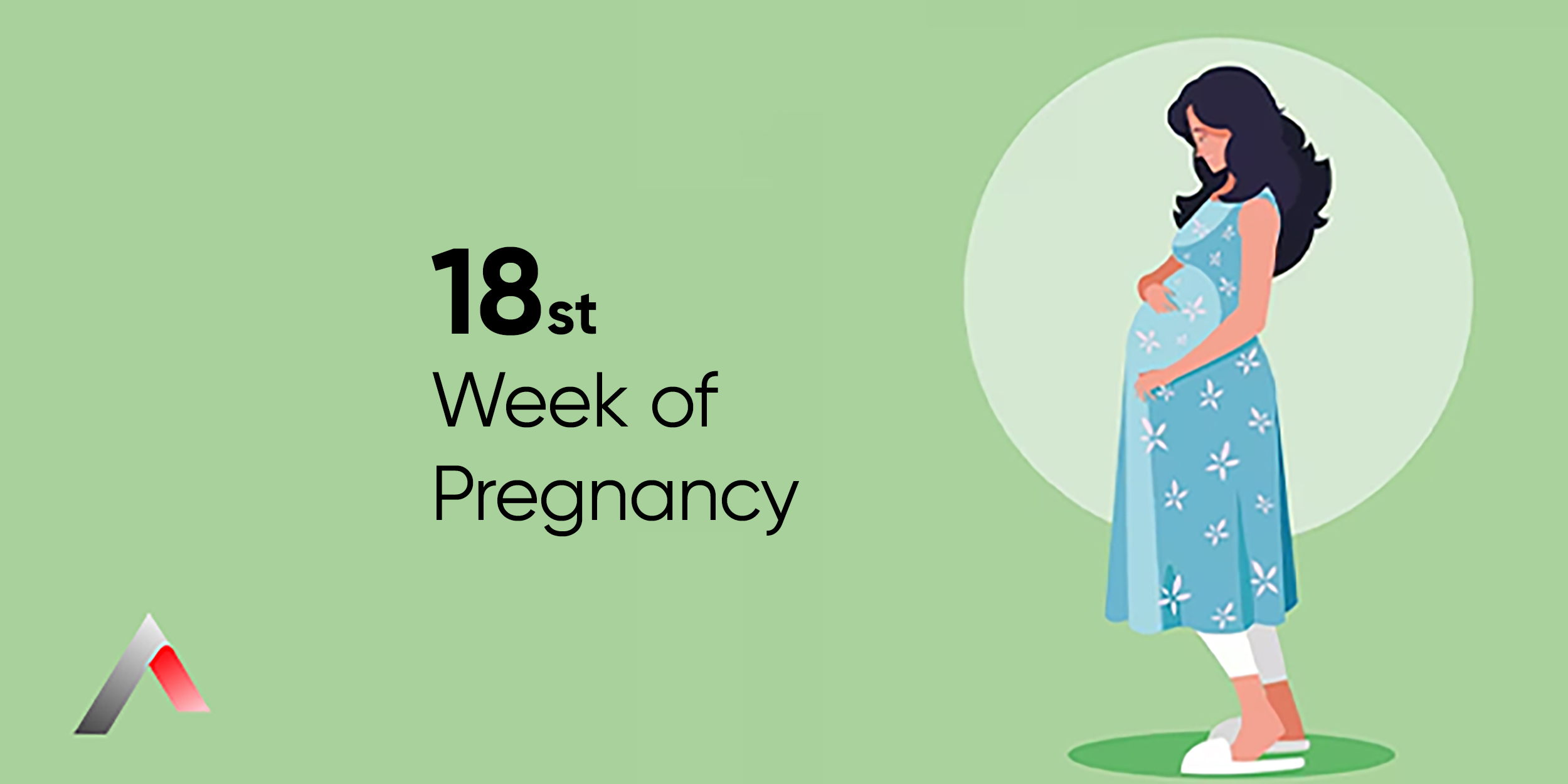
You have entered the 18th week of your pregnancy! Congratulations, you are right in the middle of a magical journey with your baby. This week, your baby is making significant developments and is becoming more human-like every day.
Size and Weight:
At 18 weeks of pregnancy, your baby is approximately 14-15 cm long and weighs 150-200 grams. You can think of it as the size of an avocado.
Organ Development:
This week, your baby’s organs continue to develop. The heart beats regularly, the kidneys produce urine, and the intestines start functioning. The nervous system is developing, and the brain is growing rapidly. Bones are hardening, and muscles are strengthening.
Sensory Development:
Your baby’s senses are also continuing to develop. They can perceive light, hear sounds, and even respond to noises in the womb. Taste buds are developing, and they can sense the flavor of the amniotic fluid.
Movements:
At 18 weeks, your baby’s movements become more noticeable. Some mothers may feel their baby’s movements for the first time this week. Your baby can kick, clench fists, and even somersault.
At the 18th week of your pregnancy, many changes continue to occur in your body.
Physical Changes:
Emotional Changes:
Eating healthily throughout pregnancy is very important for both your health and your baby’s.
Important Nutrients:
Foods and Substances to Avoid:
At 18 weeks of pregnancy, your baby’s gender can be determined by ultrasound. However, depending on the baby’s position, it is also possible that the gender may not be visible.
At 18 weeks of pregnancy, a detailed ultrasound scan can be performed. This scan is done to examine your baby’s anatomy in detail and to check for any abnormalities.
A Life Health Group has a team of experienced obstetrics and gynecology specialists specializing in pregnancy follow-up. We provide personalized pregnancy monitoring services to expectant mothers and their babies using the latest technology and methods.
Our Services:
Experience a healthy pregnancy with A Life Health Group!
An 18-week pregnancy corresponds to approximately 4.5 months. In pregnancy calculations, each month is considered to have 4 weeks. Therefore, an 18-week pregnancy indicates that you are nearly halfway through your pregnancy.
In a pregnancy lasting a total of 40 weeks, at 18 weeks, there are approximately 22 weeks left until delivery. This corresponds to about 5.5 months.
At this week, the baby's weight is approximately 180–200 grams. Its height is around 14–14.2 centimeters. The baby is roughly the size of a cucumber.
At the 18-week checkup, the mother's weight and blood pressure are measured. The baby's heartbeat is listened to, and the abdominal size is checked. If necessary, an ultrasound is performed to assess the baby's development and position. A detailed ultrasound may be appropriate at this stage.
Changes in the mother may include a more prominent abdomen, digestive issues such as heartburn and constipation, back pain, leg cramps, shortness of breath, and emotional fluctuations.
The baby's sense of hearing develops, movements such as kicks and punches become more noticeable, the baby starts to hiccup, fingerprints form, genitalia become distinguishable, and reflexes continue to develop.
Groin pain, back pain, leg cramps, and headaches are common during this period.
At this week, baby movements are usually felt as gentle vibrations or fluttering sensations.
Nutrition should be rich in protein, iron, and calcium. Drink plenty of water, prevent constipation with fiber-rich foods, and take the vitamin and mineral supplements recommended by your doctor.
Unless otherwise indicated by your doctor, sexual activity is safe during this period.
A lung-maturing injection is administered in pregnancies at risk of preterm birth to help the baby's lungs mature more quickly.
Although rare, there is a possibility of error in gender determination.
Stretch marks may appear on the abdomen and breast areas. Using moisturizers and oils to increase skin elasticity can help reduce the formation of stretch marks.
Walking, swimming, prenatal yoga or Pilates, and pelvic floor exercises are recommended.
Regular contractions, vaginal bleeding, water breaking, and severe abdominal or back pain may be signs of preterm labor.
The femur length can be approximately 25–30 mm.
Yes, fatigue can occur due to hormonal changes and the body's increasing demands.
Hemorrhoids can develop due to constipation and increased pressure.
Diarrhea may occur due to hormonal changes or food poisoning.
The risk of urinary tract infection increases during pregnancy.
Groin pain can occur due to the growing uterus and stretching ligaments.
Bloating may occur due to hormonal changes and the slowing of the digestive system.
Mild abdominal pain is normal, but severe pain should be evaluated by a doctor.
Light spotting or white discharge can be normal. However, bleeding or foul-smelling discharge should be evaluated by a doctor.
Sweating may increase due to hormonal changes and the increased blood volume.
Colostrum discharge from the breasts can be normal.
It can be administered in pregnancies with a risk of miscarriage or if a progesterone deficiency is detected.
Lying on your side (especially the left side) is recommended.
In Turkey, it is legally allowed up to the 10th week. At 18 weeks, it is not legal, but it may be performed if the mother’s life is at risk.
Gestational diabetes is detected with a glucose tolerance test performed between the 24th and 28th weeks. However, earlier screening may be done in pregnant women with risk factors.
Sudden drops in blood pressure can be dangerous and should be reported to a doctor.
Last Updated: 6 Kasım 2025 14:05
Publish Date: 6 Kasım 2024 15:47

Please fill in the fields below so that we can reach you
We are here for all your questions and problems 24/7.


 TR Türkçe
 EN English
 0 (850) 888 54 33


 E-Appointment
 E-Appointment
  E-Result














 0 (850) 888 54 33
 WhatsApp
 E-Appointment