




Online appointment bookings are currently only available to Turkish citizens. To schedule an appointment with your passport, please call our call center or send mail: +90 850 707 0606 & international@alifehospital.com.tr
You can choose one of the communication channels below to help you.
 +90 (850) 888 54 33
 info@alifehospital.com.tr

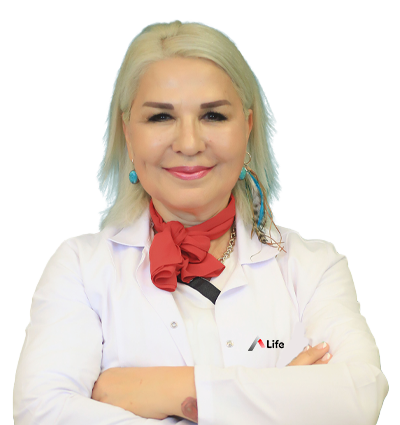
Op. Dr. Emine Gül Savcı is a specialist and experienced physician in the field of obstetrics and gynecology, working within A Life Health Group. She has committed herself to providing high-quality and meticulous healthcare services to her patients through her deep knowledge and professional competence in this field.
Op. Dr. Savcı successfully completed her medical education and subsequent specialty training, acquiring extensive theoretical and practical knowledge in women's health and obstetrics. This comprehensive education has enabled her to develop effective solutions to health problems women face at different stages of life throughout her professional career.
Her professional career has been shaped by continuous efforts to improve her knowledge and skills. During her tenure at A Life Health Group, she aims to offer the best healthcare services to her patients by utilizing the technological opportunities provided by modern medicine and the most up-to-date treatment methods.
Op. Dr. Savcı adopts a personalized treatment approach tailored to each patient's individual needs. This approach includes principles of establishing trust-based communication with patients, understanding their health expectations, and encouraging their active participation in treatment processes. With a patient-centered perspective, Op. Dr. Savcı strives to ensure that every woman feels comfortable and safe.
| Year | Education / Event |
|---|---|
| 1960 | Born in Nizip, Gaziantep. |
| 1967-1972 | Completed primary education at Erzurum Primary School. |
| 1972-1978 | Attended middle and high school education at TED Ankara College. |
| 1978-1984 | Received medical education at Ankara University Faculty of Medicine. |
| Years | Institution |
|---|---|
| 2016-Present | A life Sağlık Grubu Ankara Hospital |
| 2014 - 2016 | Private Etimed Hospital |
| 2014 - 2014 | Private Güney Internal Medicine Branch Center |
| 2013 - 2014 | Private Doğumed Medical Center |
| 2011 - 2013 | Private Keçiören Hospital |
| 2008 - 2011 | Private Lokman Hekim Akay Hospital Branch |
| 2007 - 2008 | Engin Medical Center |
| 2007 - 2007 | Private Dirimsel Medical Center |
Dear Patients,
As a specialist in obstetrics and gynecology, being by your side in every issue related to your health and reproductive system is my top priority. I strive to respond to the various medical needs you encounter at different stages of life with the most up-to-date and effective methods.
In this regard, the main diseases and topics within my field of expertise include:
Menstrual regulation and irregularities (Amenorrhea, Dysmenorrhea, Menorrhagia, Irregular bleeding, etc.)
Premenstrual Syndrome (PMS)
Ovarian cysts
Polycystic Ovary Syndrome (PCOS)
Ovarian cancer
Myoma
Endometriosis – Chocolate cyst / Deep endometriosis
Intrauterine problems (Uterine cancer, fibroids and polyps in the uterus, uterine prolapse)
Vaginal discharge
Vaginal yeast infections
Vaginismus
Pelvic pain and disorders
Urinary incontinence
Pelvic floor dysfunction
Uterine (endometrial) cancer
Cervical cancer
Ovarian cancer
Fallopian tube cancer
Vulvar cancer
Vaginal cancer
HPV infection and HPV vaccination
Sexual health
Infertility (difficulty conceiving)
In Vitro Fertilization (IVF)
Pregnancy follow-up and delivery
Pregnancy-related conditions
As a specialist in obstetrics and gynecology, the health of the female reproductive system and the management of childbirth are my core areas of expertise and top priorities. In cases requiring surgery, I successfully perform a range of surgical procedures with the aim of maintaining the highest possible standard of health and quality of life for my patients.
The main surgical methods I perform include:
This method, increasingly used in gynecology, is performed using a camera and instruments inserted through small incisions in the abdominal area.
Applications:
Diagnostic laparoscopy (to examine the abdominal cavity for diagnostic purposes)
Removal of ovarian cysts
Removal of fibroids (laparoscopic myomectomy)
Treatment of endometriosis
Hysterectomy (laparoscopic removal of the uterus)
Treatment of ectopic pregnancy
Tubal ligation
Surgery for uterine prolapse
This is a procedure in which the inside of the uterus is examined and treated using a thin camera (hysteroscope) inserted through the cervix.
Applications:
Removal of uterine polyps
Removal of intrauterine adhesions
Investigation of abnormal uterine bleeding
Removal of intrauterine devices (IUDs)
This is a traditional surgical method performed through a larger abdominal incision.
Applications:
Removal of large fibroids
Advanced-stage cancer surgeries
Emergency cases (e.g., ruptured ectopic pregnancy)
This is the delivery of a baby through incisions made in the abdominal wall and uterus.
It is preferred when vaginal birth is not possible or poses risks.
Labiaplasty (inner labia reshaping)
Vaginoplasty (vaginal tightening)
Gynecologists may request various tests to evaluate their patients’ general health and, more specifically, the health of the reproductive system, to diagnose diseases, and to determine appropriate treatment methods. The type of tests requested varies based on the patient’s complaints, physical examination findings, and the physician’s clinical assessment.
Common Tests Requested by Gynecologists:
This is a fundamental procedure that should be performed on every patient. Your doctor examines the external and internal genital organs (vagina, cervix, uterus, ovaries) both manually and visually.
Transvaginal Ultrasonography: Provides a detailed view of the uterus, ovaries, and other pelvic organs using a probe inserted into the vagina.
Abdominal Ultrasonography: Images pelvic organs and detects issues such as fibroids or cysts via a probe placed on the abdomen.
A test for screening and early detection of cervical cancer. Cells are collected from the cervix and examined under a microscope.
This test is used to screen for Human Papillomavirus (HPV), the primary cause of cervical cancer.
FSH (Follicle Stimulating Hormone): Regulates ovarian stimulation and egg production.
LH (Luteinizing Hormone): Triggers ovulation.
Estrogen: Known as the female sex hormone.
Progesterone: Prepares the uterine lining for pregnancy in the second half of the menstrual cycle.
Thyroid Hormones (TSH, T3, T4): Assess thyroid gland function.
Prolactin: Stimulates milk production.
Testosterone: Although known as a male hormone, it is also present in women.
AMH (Anti-Müllerian Hormone): Indicates ovarian reserve.
These tests are used to diagnose problems related to hormonal imbalances, such as menstrual irregularities, infertility, or hirsutism (excessive hair growth).
Vaginal Culture: A sample from vaginal discharge is examined for fungi, bacteria, or other microorganisms.
Sexually Transmitted Infection (STI) Tests: Tests for infections such as chlamydia, gonorrhea, and trichomoniasis.
Pap smear and HPV tests are screening tools for cervical cancer.
When necessary, additional blood tests (e.g., CA-125) may be ordered to assess for uterine or ovarian cancer.
Before pregnancy, your doctor may request tests such as a complete blood count, urinalysis, blood typing, and infectious disease screening.
During pregnancy, various ultrasound and blood tests (e.g., first-trimester screening, triple or quadruple test) are performed to monitor the baby's health and development.
Last Updated: 7 Şubat 2026 23:09
 Randevu Al

Elvan Neighborhood 1934/4 Etimesgut/Ankara

+90 (850) 888 54 33
Aydınlıkevler, Uzayan Street No:99, 06130 Altındağ/Ankara
0850 850 54 33
Fatih Neighborhood, Yavuz Boulevard, No: 15 Pursaklar / Ankara
+90 (850) 888 54 33
We are here for all your questions and problems 24/7.
Please fill in the fields below so that we can reach you
Başlangıç Tarihi:
Bitiş Tarihi:


 TR Türkçe
 EN English


 E-Appointment
  E-Result

 More Detail
  0 (850) 888 54 33
 WhatsApp
 E-Appointment