

As A Life Health Group, we are here to provide you with the most accurate and up-to-date information at every moment of your 14-week pregnancy journey and to support you. We have prepared a comprehensive information page about "14-week pregnancy" for this joyful period. On this page, you will learn in detail what happens in the fourteenth week of pregnancy, what changes occur in your body and your baby, what you need to pay attention to, and what the second trimester will bring you.
Pregnancy is calculated from the first day of your last menstrual period. At 14 weeks of pregnancy, your baby’s length reaches approximately 8-9 cm and is now about the size of a peach. This week marks a pleasant period in your baby’s second trimester, the risk of miscarriage is further reduced, and generally, expectant mothers continue to feel more energetic.
All of your baby’s major organs have formed and started functioning. This week, your baby’s neck muscles strengthen, allowing them to hold their head up. Additionally, your baby’s facial muscles develop, enabling various expressions. The thyroid gland begins hormone production and helps regulate body temperature.
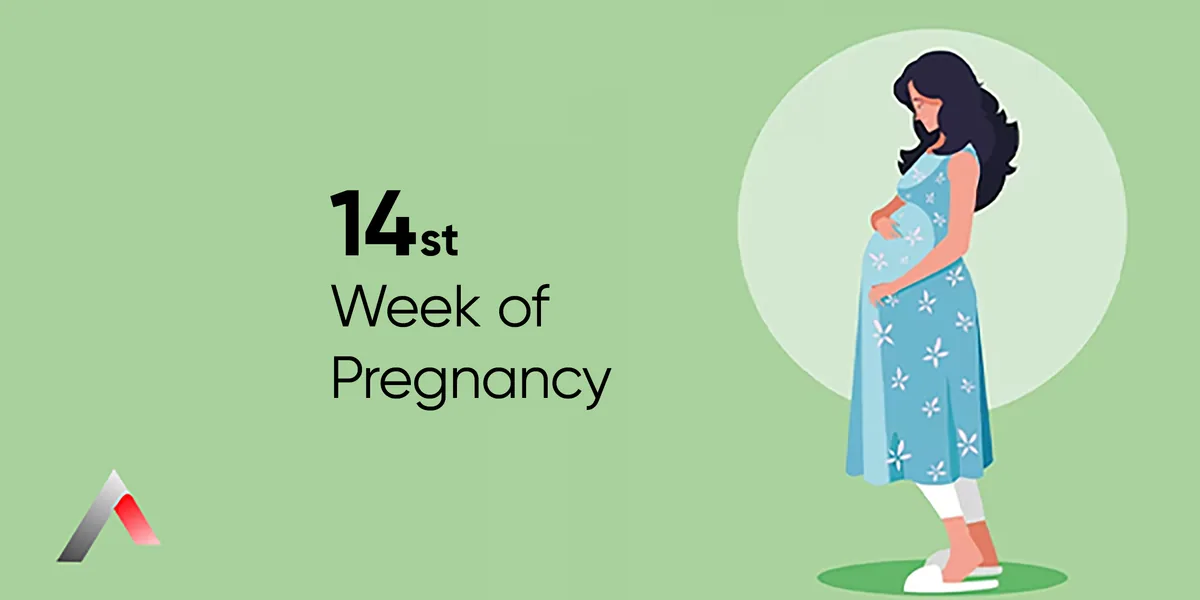
At 14 weeks of pregnancy, you continue to experience some changes due to hormonal shifts and your body adjusting to your baby. Many of the uncomfortable symptoms seen at the end of the first trimester decrease, and you begin to feel more energetic.
At 14 weeks of pregnancy, significant developments occur in your baby:
At 14 weeks of pregnancy, there are some important points to consider for your baby's healthy development and for maintaining a healthy pregnancy yourself.
At 14 weeks of pregnancy, your doctor may recommend a nuchal translucency measurement and a dual screening test to check for certain chromosomal abnormalities, such as Down syndrome. This test includes a blood test and an ultrasound examination. Additionally, optionally, a triple screening test or quadruple screening test can be performed. These tests, in addition to the dual screening, measure different hormones to assess the risk of Down syndrome and other chromosomal abnormalities.
At 14 weeks of pregnancy, the risk of miscarriage decreases significantly compared to the first weeks of gestation. However, there is still a risk. If you notice symptoms such as vaginal bleeding, abdominal pain, or cramps, contact your doctor immediately.
At 14 weeks, your baby's genital organs are developed. It may be possible to determine the gender through an ultrasound examination.
At 14 weeks, a twin pregnancy can be easily diagnosed with an ultrasound examination. Two separate gestational sacs and two fetuses will be visible.
Continue taking the vitamin and mineral supplements recommended by your doctor. These may include nutrients such as iron, calcium, and vitamin D.
Following the healthy lifestyle recommendations mentioned above is important for your baby’s healthy development and for a healthy pregnancy. Also, remember to attend regular check-ups with your doctor and follow their advice.
The second trimester is generally a period when expectant mothers feel better and have increased energy. However, you may still experience emotional changes. Changes in your body, new responsibilities, and concerns about the future may cause anxiety. Here are some suggestions for your mental health at 14 weeks of pregnancy:
As A Life Health Group, we are here to support you from the pregnancy planning stage to postpartum. Our specialist doctors and healthcare staff will guide you through every step of your pregnancy and answer all your questions. Our nutrition experts can help you create a personalized nutrition plan throughout your pregnancy. Our psychologists can support you in maintaining your mental health and coping with the emotional challenges during pregnancy.
We wish you a healthy pregnancy and a joyful motherhood journey!

Please fill in the fields below so that we can reach you
We are here for all your questions and problems 24/7.


 0 (850) 888 54 33


 E-Appointment
 E-Appointment
  E-Result














 0 (850) 888 54 33
 WhatsApp
 E-Appointment