

Women's health is one of A Life Health Group's top priorities. In this comprehensive guide, we will provide detailed information about Bartholin cysts, a common condition in women. You will find answers to questions such as what a Bartholin cyst is, what causes it, what its symptoms are, and how it is treated. A Life Health Group’s expert gynecology team supports your recovery by offering the latest medical advancements and personalized treatment approaches for Bartholin cyst treatment.
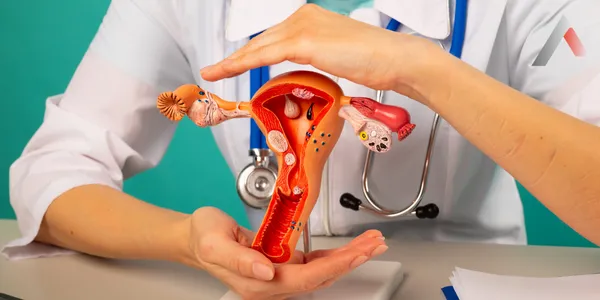
A Bartholin cyst is a fluid-filled sac that forms when the Bartholin glands, located on either side of the vaginal opening, become blocked. These glands produce fluid that helps lubricate the vagina. When the duct of a gland becomes obstructed, fluid builds up and leads to the formation of a cyst. A Bartholin cyst is usually painless, but as it grows, it may cause discomfort and pain. If it becomes infected, it can lead to a painful condition known as a Bartholin abscess.
The exact causes of Bartholin cyst formation are not fully known. However, several factors that may lead to the blockage of the gland duct include:
A Bartholin cyst is usually small and painless and does not cause any symptoms. However, as the cyst grows or becomes infected, the following symptoms may appear:
The diagnosis of a Bartholin cyst is usually made through a physical examination. Your doctor can detect the cyst by examining the vaginal opening and surrounding area. In suspicious cases, the following tests may be performed:
The treatment of a Bartholin cyst varies depending on the size of the cyst, symptoms, and presence of infection. Treatment options include:
To prevent Bartholin cyst, you can pay attention to the following recommendations:
No, Bartholin cyst is generally benign and has a low risk of turning into cancer.
Small and painless Bartholin cysts may sometimes resolve on their own. However, if the cyst is large or painful, treatment may be necessary.
Yes, Bartholin cyst can recur. Surgical methods such as marsupialization can be applied to prevent recurrence of the cyst.
Bartholin cyst generally does not affect pregnancy. However, the cyst may become infected during delivery and may require treatment.
If the cyst is large and painful, it can cause discomfort during sexual intercourse.
A Life Health Group has a team of expert gynecologists and state-of-the-art diagnostic and treatment units to provide you with the best service in Bartholin cyst treatment.
Advantages of A Life Health Group:
Expert gynecology team: Accurate diagnosis and effective treatment planning are carried out by experienced and specialized gynecologists.
Comprehensive diagnostic methods: Advanced diagnostic methods such as physical examination, pelvic ultrasound, and cyst fluid culture are used to thoroughly investigate the cause and condition of your Bartholin cyst.
Personalized treatment plan: The most suitable treatment plan is created considering the size, symptoms, and infection status of your cyst.
Advanced technology: The most effective results are achieved using state-of-the-art treatment methods such as medication, cyst drainage, marsupialization, and cyst excision.
Modern and comfortable environment: You receive diagnostic and treatment services in a comfortable and reliable setting.
Patient-centered approach: We are always by your side to support you during the treatment process and answer your questions.
Last Updated: 6 Kasım 2025 14:05
Publish Date: 24 Nisan 2024 17:40

Please fill in the fields below so that we can reach you
We are here for all your questions and problems 24/7.


 TR Türkçe
 EN English
 0 (850) 888 54 33


 E-Appointment
 E-Appointment
  E-Result













 0 (850) 888 54 33
 WhatsApp
 E-Appointment