


 TR Türkçe
 EN English
 0 (850) 888 54 33


 E-Appointment
 E-Appointment
  E-Result
- Frequent urination
- Difficulty urinating
- Weak urine flow
- Feeling of incomplete bladder emptying
- Nocturia (waking up at night to urinate)
- Sudden urgency to urinate

Andrology Unit


Prostate TUR surgery, or TURP (Transurethral Resection of the Prostate), is a surgical procedure used to treat benign prostatic hyperplasia (BPH). In this surgery, excess tissue in the prostate gland is removed using an instrument (resectoscope) inserted through the urinary tract (urethra). TURP is an effective method to relieve symptoms of prostate enlargement and improve urine flow.
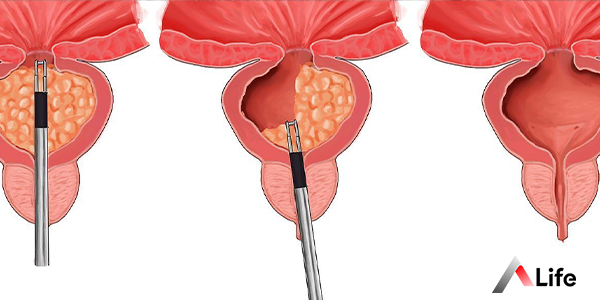
Benign prostatic hyperplasia (BPH) is the enlargement of the prostate gland that occurs with age. The prostate is a small gland located below the bladder that produces part of the semen. BPH can compress the urinary tract, causing difficulty in urination.
TURP surgery may be suitable for men with the following conditions:
During TURP surgery, the patient is placed under general or spinal anesthesia. A device (resectoscope) is inserted through the urethra to remove excess tissue from the prostate gland. The resectoscope contains a camera, light source, and cutting wire. The surgeon visualizes the prostate gland with the resectoscope and removes the excess tissue by cutting it. At the end of the procedure, a catheter is placed in the urinary tract to allow urine to flow out and to facilitate the healing process.
Evaluation and Tests:
Before surgery, the patient’s overall health is assessed and a series of tests are performed. These tests may include blood tests, urine tests, imaging tests (such as ultrasound), and a prostate biopsy (if cancer is suspected).
Preparation Process:
Prior to surgery, the patient may need to fast for a certain period. Additionally, some medications may need to be temporarily discontinued. Your doctor will provide detailed information about the preoperative preparation process.
Recovery Process:
After surgery, you may need to stay in the hospital for a few days. The recovery period varies from person to person, but generally lasts a few weeks. During this time, pain relievers can be used, and you should limit your activities according to your doctor’s recommendations.
Urinary Incontinence:
Temporary urinary incontinence may occur after TURP surgery. This problem usually improves over time. Your doctor may recommend pelvic floor exercises to reduce urinary incontinence.
Sexual Functions:
Rarely, sexual function problems such as erectile dysfunction or retrograde ejaculation (semen entering the bladder) may occur after TURP surgery.
Possible Complications:
Rare complications may develop after TURP surgery. These include bleeding, infection, urethral stricture, and TUR syndrome (a condition caused by absorption of the fluid used during surgery into the bloodstream).
A Life Health Group has a team of experienced urology surgeons specialized in TURP surgery. We provide personalized treatment plans using the latest technology and methods. We offer comprehensive support and follow-up services to our patients before and after surgery.
Advantages offered by A Life Health Group:
A Life Health Group has a team specialized in TURP surgery and other urological surgical procedures. You can contact us for your health needs.
Please fill in the fields below so that we can reach you
We are here for all your questions and problems 24/7.

 0 (850) 888 54 33
 WhatsApp
 E-Appointment