




Online appointment bookings are currently only available to Turkish citizens. To schedule an appointment with your passport, please call our call center or send mail: +90 850 707 0606 & international@alifehospital.com.tr
You can choose one of the communication channels below to help you.
 +90 (850) 888 54 33
 info@alifehospital.com.tr

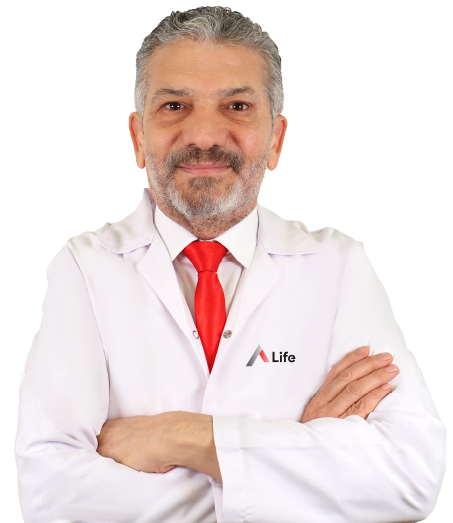
Op. Dr. Oğuz Fidan is a respected physician with extensive knowledge and many years of experience in the field of eye diseases. Aiming to provide his patients with the most current and effective treatment methods, Dr. Fidan has dedicated his professional life to serving humanity.
With a solid medical background, Dr. Fidan completed his medical education at Ankara University Faculty of Medicine, one of Turkey’s prestigious educational institutions.
He successfully completed his specialty training in eye diseases at Vehbi Koç Eye Specialty Hospital, a significant center in eye health, earning his expertise in ophthalmology.
Dr. Fidan has gained extensive experience by serving in various healthcare institutions throughout his professional career. He began his career as the Chief Physician at the SSK Ulucanlar Eye Bank, where he provided significant services for many years.
In addition to his medical education, Dr. Fidan's studies in law and philosophy of religion demonstrate that he is a multifaceted individual with a broad knowledge base and a wide worldview. This background contributes to offering a more comprehensive approach to his patients.
Currently continuing his work within A Life Sağlık Grubu, Dr. Fidan aims to provide high-quality healthcare services by utilizing his professional experience and knowledge. He is dedicated to resolving eye health issues and improving the quality of life for his patients.
As A Life Sağlık Grubu, we are pleased to offer you the expertise and experience of Op. Dr. Oğuz Fidan in eye health, especially in complex conditions such as optic atrophy.
| Education Type | Institution |
|---|---|
| Medical Education | Ankara University Faculty of Medicine |
| Specialization | Vehbi Koç Eye Specialty Hospital |
| Institution |
|---|
| Ankara Occupational and Environmental Diseases Hospital |
| Ankara Etlik Specialty Training and Research Hospital |
| Ankara Çubuk Halıl Şivgin State Hospital |
| Private 34 Hospital |
| Private Veni Vidi Mamak Hospital |
| Private Natomed Hospital |
| Private Yüzüncüyıl Hospital |
| A Life Hospital Pursaklar |
As an ophthalmologist, my priority is to assist you in all matters related to eye and vision health. My expertise includes diagnosing a wide range of conditions affecting the eye and visual system, planning appropriate treatments, and performing surgical interventions when necessary.
Some key areas of eye health that I focus on include:
Myopia (Nearsightedness): Inability to see distant objects clearly.
Hyperopia (Farsightedness): Inability to see nearby objects clearly.
Astigmatism: Blurred vision due to irregular focus of light in different meridians.
Presbyopia: Age-related decline in near vision.
Clouding of the eye’s natural lens leading to decreased vision.
A condition often associated with elevated eye pressure that can damage the optic nerve and lead to vision loss.
Macular Degeneration: Age-related disease affecting the central retina.
Diabetic Retinopathy: Retinal damage caused by diabetes.
Retinal Detachment: Separation of the retina from underlying tissue.
Retinitis Pigmentosa: Inherited retinal disorder.
Keratoconus: Thinning and bulging of the cornea into a cone shape.
Corneal Infections: Infections caused by bacteria, viruses, or fungi.
Corneal Dystrophies: Inherited disorders affecting the cornea.
Blepharitis: Inflammation of the eyelids.
Dry Eye: Insufficient or poor-quality tears.
Conjunctivitis: Inflammation of the conjunctiva (pink eye).
Ptosis: Drooping of the upper eyelid.
Lacrimal Duct Obstruction: Blockage in the tear drainage system.
Disorders involving the optic nerve and visual pathways.
Strabismus: Misalignment of the eyes.
Amblyopia (Lazy Eye): Reduced vision in one eye during childhood.
Other Childhood Eye Conditions.
Inflammation of one or more layers of the eye’s uveal tract.
Injuries to the eye.
To protect and improve your eye health, I am pleased to offer you the most advanced surgical treatment options available through modern medicine and technology. Surgical treatments for eye diseases cover a broad spectrum—from common conditions like cataracts to the correction of refractive errors and the management of serious retinal disorders. These procedures play a vital role in restoring your vision and enhancing your quality of life.
With my expertise and experience, I offer the following main areas of eye surgery:
LASIK (Laser-Assisted In Situ Keratomileusis): One of the most common laser eye surgeries; a flap is created in the cornea and laser is applied beneath it.
PRK (Photorefractive Keratectomy): Laser is applied to the cornea after removing its surface epithelial layer.
LASEK (Laser Epithelial Keratomileusis): A technique combining features of PRK and LASIK.
SMILE (Small Incision Lenticule Extraction): A minimally invasive method involving the removal of a small piece of corneal tissue through a tiny incision.
Phakic Intraocular Lens Implantation: An additional artificial lens is placed inside the eye without removing the natural lens.
These techniques are used to correct myopia, hyperopia, and astigmatism.
Phacoemulsification: The gold standard for cataract treatment. The cloudy lens is emulsified with ultrasound waves through a small incision and replaced with an intraocular lens.
Surgical procedures designed to lower intraocular pressure and slow the progression of glaucoma. Techniques include trabeculectomy, tube shunt implantation, and minimally invasive glaucoma surgeries (MIGS).
Vitreoretinal Surgery: Used for conditions like retinal detachment, macular holes, vitreous hemorrhage, and diabetic retinopathy. These surgeries are performed using specialized instruments under a microscope.
Corneal Transplant (Keratoplasty): Replacement of a diseased cornea with a donor cornea. Variants include full-thickness and lamellar keratoplasty.
Corneal Cross-Linking: Used to halt the progression of keratoconus and other corneal deformities.
Surgical interventions involving the eyelids, tear drainage system, orbit (eye socket), and surrounding facial structures. This includes treatment for ptosis, entropion, ectropion, tear duct obstruction, orbital tumors, and cosmetic eyelid surgeries (blepharoplasty).
Strabismus Surgery: Realignment of the eye muscles to correct misalignment.
Pterygium Surgery: Removal of a fleshy tissue growing from the white of the eye toward the cornea.
Your eye health is of great importance to me. That is why I work meticulously to ensure that any issue you experience with your eyes is accurately diagnosed and that the most appropriate treatment options are determined for you. The diagnostic process for eye diseases is not limited to a single test; it is a holistic approach formed through effective communication with our patients, a comprehensive physical examination, and the evaluation of various advanced techniques.
When necessary, based on this evaluation, we utilize a range of tests and imaging methods that allow us to gather more detailed information.
These tests are carefully selected and applied according to the specific needs of each patient.
Fluorescein or Indocyanine Green Angiography (FFA or ICGA): Imaging of the blood vessels in the retina or choroid.
Optical Coherence Tomography (OCT): Cross-sectional imaging of the retina, macula, and optic nerve for high-resolution assessment.
Visual Field Test: Used to determine the scope of peripheral vision and detect vision loss.
Corneal Topography: Maps the curvature and thickness of the corneal surface.
Other Tests: Color vision tests, contrast sensitivity, strabismus tests, electrophysiological assessments, and more.
Each of these examinations is essential in forming a complete picture of your eye health and guiding the most effective treatment path forward.
Last Updated: 8 Şubat 2026 00:20
 Randevu Al

Elvan Neighborhood 1934/4 Etimesgut/Ankara

+90 (850) 888 54 33
Aydınlıkevler, Uzayan Street No:99, 06130 Altındağ/Ankara
0850 850 54 33
Fatih Neighborhood, Yavuz Boulevard, No: 15 Pursaklar / Ankara
+90 (850) 888 54 33
We are here for all your questions and problems 24/7.
Please fill in the fields below so that we can reach you
Başlangıç Tarihi:
Bitiş Tarihi:


 TR Türkçe
 EN English


 E-Appointment
  E-Result

 More Detail
  0 (850) 888 54 33
 WhatsApp
 E-Appointment